
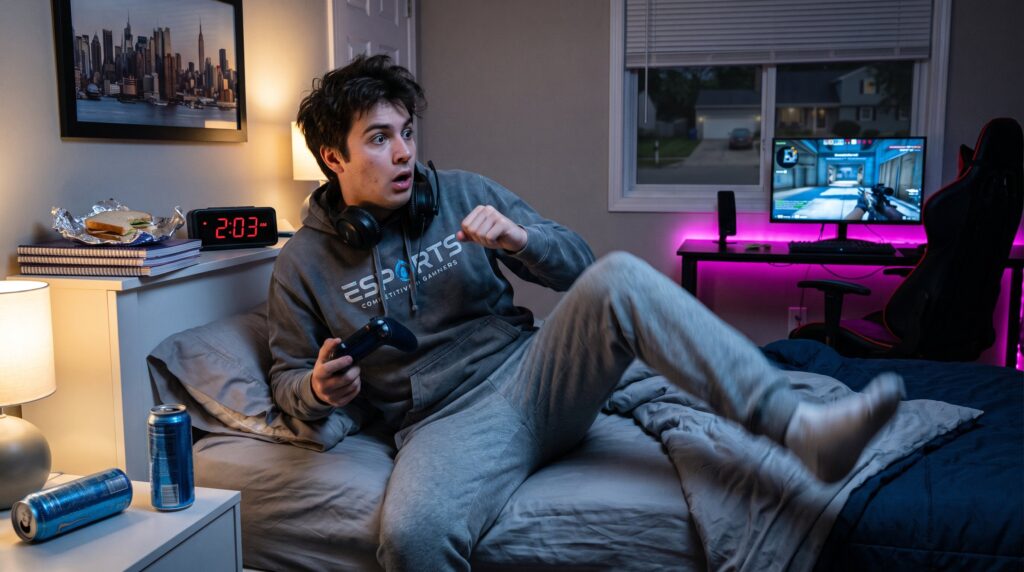
Ryckningar i kroppen när man sover, suddenly, a leg flings and a gamer wakes, heart racing. Hypnic jerks are the common cause: brief, involuntary muscle twitches at sleep onset. This guide explains the simple science, gamer-specific triggers, warning signs, and practical fixes so players can sleep deeper and perform better the next day.
Key Takeaways
- Hypnic jerks are common involuntary muscle twitches that occur mainly at sleep onset, affecting up to 70% of people at some point.
- For gamers, factors like stress, sleep deprivation, late-night gaming, and caffeine from energy drinks increase the likelihood of experiencing hypnic jerks.
- Maintaining a consistent sleep schedule, avoiding intense gaming and caffeine close to bedtime, and practicing relaxation techniques can reduce hypnic jerks and improve sleep quality.
- If muscle twitches happen frequently throughout the night, cause daytime sleepiness, or are accompanied by other symptoms like confusion or loss of consciousness, medical evaluation is necessary.
- Early intervention through lifestyle changes or professional help enhances sleep quality and daytime performance for gamers experiencing sleep-onset twitches.
What Are Hypnic Jerks? Simple Science Behind Sleep Twitches
Fact first: hypnic jerks are sudden, brief, involuntary muscle contractions that happen as a person drifts from wakefulness into light non‑REM sleep. These events, often called sleep starts, hypnagogic jerks, or sleep myoclonus, typically affect a leg or arm, but can involve the whole body.
Simple mechanism: the brain’s motor system briefly fires as it transitions. Scientists classify these events as a form of myoclonus and note they occur during the wake-to-sleep boundary. Up to about 70% of people report at least one episode in their life, making them a very common phenomenon. People sometimes experience a vivid sensation, a falling or tripping image, immediately before or during the twitch.
Why the brain misfires is not settled. Leading ideas include a harmless neural “miscommunication” during state change, an evolutionary startle reflex, imagine an ancestor falling from a limb, and possible interactions with the systems that later cause REM sleep paralysis. None of these explanations are fully proven, but they fit observed patterns: jerks cluster at sleep onset and fade as sleep deepens.
Practical detail for gamers: these twitches most often occur in the first minutes after lights-out, not in deep stages of sleep. That timing matters when planning bedtime routines and cooldown periods after late matches.
Common Triggers And Risk Factors—Especially For Gamers
Fact first: stress, sleep deprivation, stimulants, and late exercise increase the chance of hypnic jerks. For gamers, those risk factors come together often.
Specific triggers include acute stress and anxiety, which raise sympathetic arousal: caffeine and nicotine, which prolong wakefulness: irregular sleep schedules: and intense physical activity late in the evening. Energy drinks are a major amplifier: a single 250 ml energy drink can contain 80–160 mg of caffeine and other stimulants that keep the nervous system wired.
Gamer scenarios that raise risk: long, late-night esports sessions that end at 2 a.m.: drinking multiple caffeinated beverages during a tournament: abrupt mood swings from clutch plays or losses: and staring at bright, high-frame-rate monitors without a cooldown. These combine to make the brain more reactive during the sleep transition, increasing frequency and intensity of twitches.
Concrete numbers: a competitive streamer who sleeps 5 hours instead of 8 raises sleep pressure and arousal mismatch. That mismatch correlates with more frequent hypnic jerks. One practical anecdote: a semi-pro player reported hypnic jerks nightly after switching to three energy drinks per session: stopping them eliminated most events within a week.
Warning: irregular schedules and stimulants don’t cause seizures, but they do make benign hypnic jerks more likely and more disruptive to sleep.
When To Worry: Red Flags, Related Conditions, And When To See A Doctor
Fact first: most hypnic jerks are harmless, but certain red flags warrant medical review. Seeing a clinician helps rule out sleep disorders or neurological conditions.
Red flags include jerks that occur continuously through the night (not only at sleep onset), events with loss of consciousness, prolonged confusion after an episode, tongue‑biting, or incontinence. Those signs suggest possible epileptic seizures rather than simple sleep starts. Severe daytime sleepiness, insomnia caused by frequent jerks, or new neurological symptoms, weakness, numbness, slurred speech, also require evaluation.
Related diagnoses a doctor may consider: periodic limb movement disorder, other sleep-related myoclonus, and epileptic myoclonus. Physicians use history, neurological exam, and sometimes polysomnography or EEG to separate benign hypnic jerks from pathological causes. New medications can change sleep‑related movements: some antidepressants and stimulants intensify myoclonus, so recent prescriptions are important to disclose.
Practical next step: if the twitching interferes with daily function or fits any red-flag pattern, consult a family doctor or a neurologist. Sleep specialists can perform targeted studies. Early evaluation avoids mislabeling the problem and can identify treatable causes such as medication effects or untreated anxiety.
A candid moment: many gamers delay medical visits because they assume twitching is “just stress.” That delay can prolong poor sleep. Simple screening often resolves the issue quickly.
Practical Tips To Reduce Nighttime Twitches And Improve Sleep For Gamers
Fact first: consistent sleep hygiene and reduced late-night stimulation lower hypnic jerks for most people. Gamers can apply focused habits that cut twitch frequency and protect performance.
Timing and routine: stop intense gaming 60–120 minutes before bedtime. A fixed sleep–wake schedule helps: aim for consistent bed and wake times even on weekends. Add a wind-down sequence: dim lights, hydrate, shower, light stretching, and 10 minutes of low-arousal reading or guided breathing. These steps reduce sympathetic activation and ease the brain into sleep.
Caffeine and substances: avoid caffeine and energy drinks at least six hours before planned sleep. Replace late stimulants with decaffeinated options. Limit nicotine in the evening and use alcohol cautiously, while alcohol may speed initial sleep onset, it fragments sleep and can worsen movements later in the night.
Screen and stimulation control: lower monitor brightness and enable blue‑light filters in the last hour. Insert a calm buffer after competitive matches, watch a relaxed stream, chat with friends, or do simple single-player content for 20–30 minutes. This reduces the head‑rush adrenaline that otherwise carries into sleep.
Body and environment: avoid heavy workouts immediately before bed: schedule intense physical training earlier in the day. Create a cool (about 65°F/18°C), dark, and quiet bedroom with comfortable bedding. Try progressive muscle relaxation or 4-4-8 breathing for 5–10 minutes, these techniques reliably lower heart rate and twitch-prone arousal.
When to escalate: if lifestyle changes don’t help and jerks remain frequent, a doctor may recommend cognitive behavioral therapy for insomnia, treat anxiety, or consider short-term medication in selected cases. Those treatments target the root drivers rather than masking symptoms.
Conclusion: Better Sleep, Fewer Twitches, Better Play
Hypnic jerks are common, usually harmless sleep‑onset twitches. For gamers, late-night play, stimulants, and irregular schedules raise risk. By stopping intense gaming early, cutting evening caffeine, and using a consistent wind‑down routine, most players lower twitch frequency, sleep deeper, and improve daytime performance. If twitches are frequent, disruptive, or accompanied by worrying symptoms, medical evaluation is important to rule out other sleep or neurological conditions.