
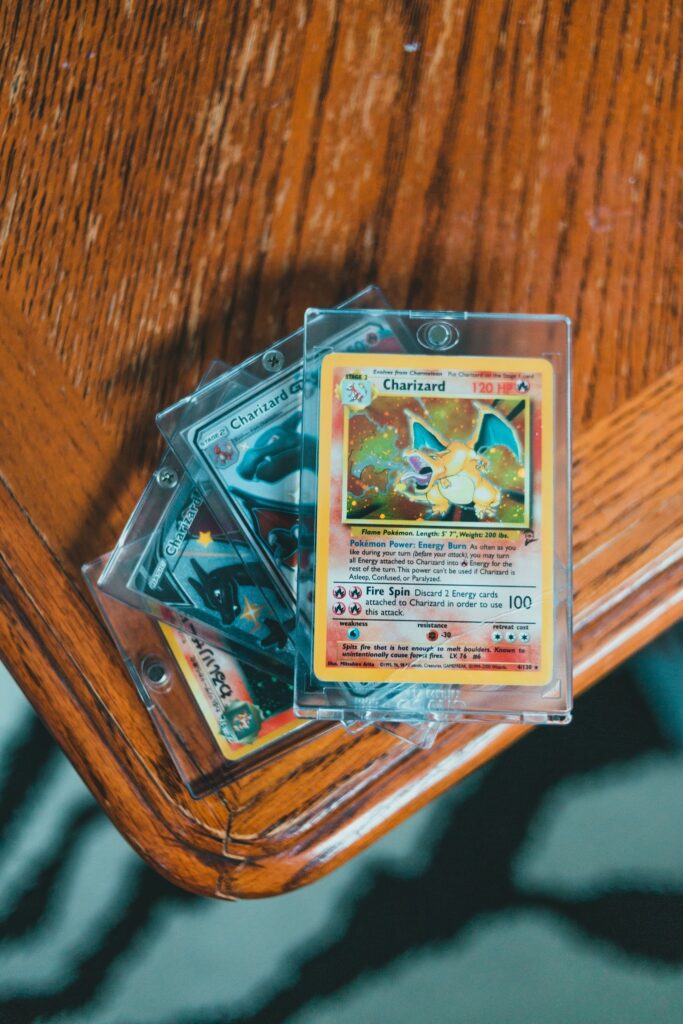
The Pokémon Trading Card Game has come a long way since lunchtime trades and playground bragging rights. What started as a childhood hobby has evolved into a global collectibles market where rarity, condition and nostalgia can push a single card’s value into the five-, six- or even seven-figure range.
Collectors with deep pockets continue to compete for the hobby’s rarest treasures, while many people are rediscovering binders they tucked away decades ago. As demand remains strong, the world’s most expensive Pokémon cards continue setting remarkable records at major auctions.
The True Holy Grails
Booster-pack pulls may grab the headlines, but the most valuable Pokémon cards were never available in packs at all. The very top of the market belongs to ultra-rare promotional cards awarded at early Japanese tournaments, making them the ultimate expensive pokemon cards out there.
At the summit sits the legendary 1998 Pikachu Illustrator card. Created by Atsuko Nishida, the original artist behind Pikachu, just 39 copies were officially awarded to winners of an illustration contest.
One PSA Gem Mint 10 example holds the all-time record after changing hands in a private sale worth several million dollars. Even copies in lower grades regularly sell for mid-six-figure amounts.
Not far behind are the coveted 1997–1999 Trophy Pikachu No. 1, No. 2 and No. 3 Trainer cards. Awarded only to top finishers at the earliest Japanese championship events, these cards rarely appear for sale. When they do, prices typically range from $400,000 to $2,000,000, depending on the specific card and its condition.
Vintage Base Set Nostalgia Holds Firm
For many collectors outside Japan, everything starts with the original 1999 Base Set. Those cards introduced an entire generation to Pokémon, but not every Base Set card carries the same value.
A standard Unlimited Base Set Charizard may sell for several thousand dollars, but a 1st Edition Shadowless Charizard #4 in pristine PSA 10 condition sits in an entirely different league. These flawless examples regularly command between $270,000 and $550,000 at major auctions. With so few perfect copies remaining, demand continues to outpace supply.
Other vintage holographic standouts reaching impressive prices in Gem Mint condition include:
- 1st Edition Neo Genesis Lugia #9 – $140,000+
- 1st Edition Neo Discovery Umbreon #13 – $65,000+
- 1st Edition Neo Destiny Shining Mewtwo #109 – $55,000+
The Mid-Era Boom: Legendary Collection Bling
Some of the biggest surprises among today’s expensive Pokémon cards come from the early 2000s. Legendary Collection reverse holographic cards, famous for their distinctive “fireworks” foil pattern, have become highly sought after because their reflective surfaces scratch so easily. Finding flawless examples has become exceptionally difficult.
One standout is Legendary Collection Reverse Holo Eevee #74. Although Eevee was originally a common card, a perfect PSA 10 example stunned collectors when it sold for $66,000 at a Fanatics Collect auction. It proved that scarcity in top condition can outweigh original rarity.
Meanwhile, Legendary Collection Reverse Holo Charizard #3 regularly exceeds $120,000 when graded PSA Gem Mint 10.
High-End Market Dynamics Shift Toward Flawless Graded Assets
If you want to understand why certain Pokémon cards become so valuable, condition is the first place to look. Professional grading has become one of the biggest factors influencing market value.
Grading companies carefully inspect a card’s centering, corners, edges and surface before assigning a score from one to ten. Something as small as a tiny white speck of wear along the back edge can reduce a card’s value by up to 90%.
That enormous difference explains why collectors pay such significant premiums for authenticated Gem Mint examples with stable population counts.
The Legendary Gold Star Era Premium
Released during the EX Series in the mid-2000s, Gold Star cards quickly became collector favorites. Their artwork extends beyond the traditional card frame, while notoriously low pull rates, often averaging around one card per booster box display, made them incredibly difficult to obtain from the start.
EX Holon Phantoms Pikachu Star #104 reaches around $50,000 in a perfect grade, reflecting the lasting popularity of Pokémon’s mascot. EX Deoxys Rayquaza Star #107 follows at roughly $47,000, while EX Dragon Frontiers Charizard Star Delta Species #100 commands more than $41,000.
Their shiny color variants and strong ties to a memorable era of competitive play continue to keep demand high.
Modern Exceptions and Hidden Grails
Although vintage releases dominate the upper end of the top 25, a handful of newer promotional cards and secret rares have also earned elite status.
Rare event-exclusive releases, including the 2010 Japanese World Championship Master’s Key promo, can comfortably exceed $40,000. At the same time, set chase cards like Plasma Storm Secret Rare Charizard #136 approach $47,000 in PSA 10 condition.
These examples show that modern releases can still achieve remarkable values when exceptional rarity, iconic artwork and flawless preservation come together.
Ultimately, the cards at the top of the market share the same qualities: historical importance, extremely limited print runs and a tiny number of perfect surviving copies.
As Pokémon collecting continues to mature alongside established collectible markets such as fine art and classic coins, these expensive Pokémon cards remain the benchmark by which all other cards are measured.