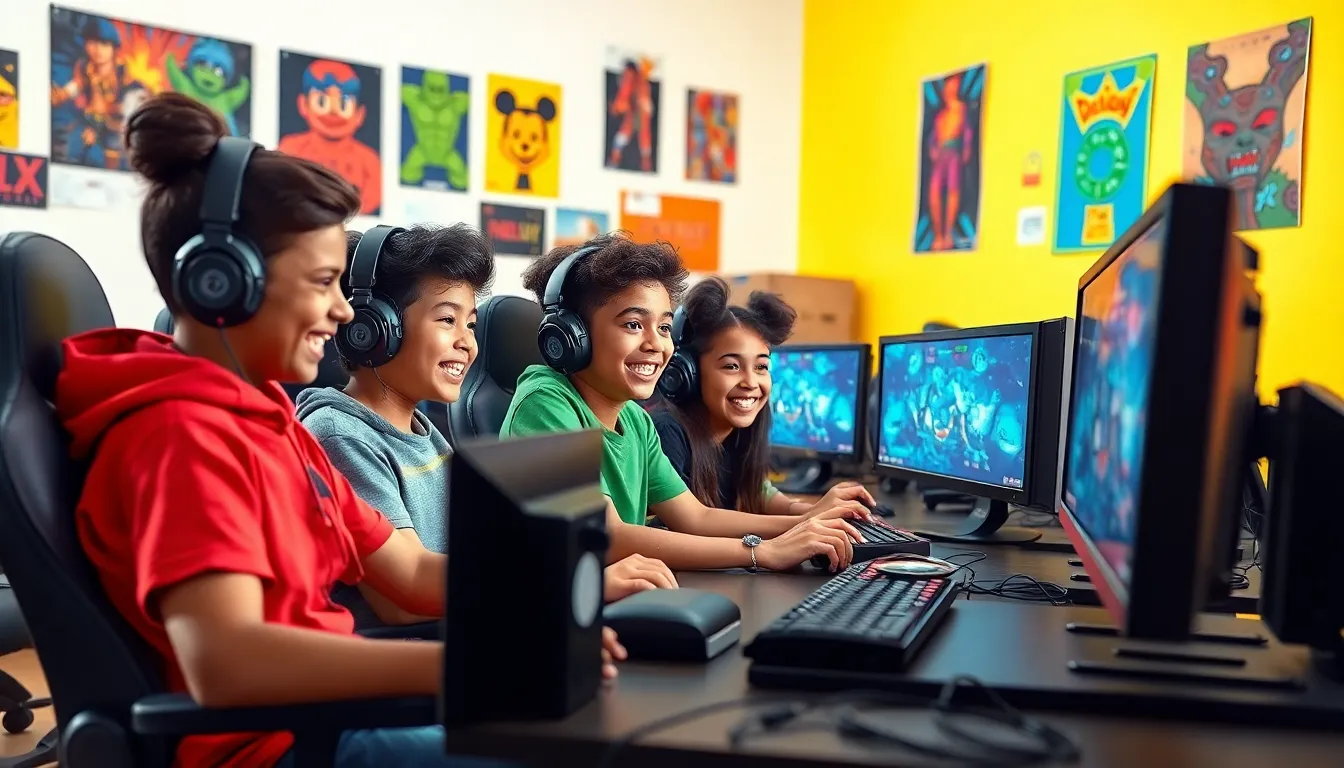
In a world where kids are glued to screens, finding the right PC games can feel like searching for a needle in a haystack. But fear not! There’s a treasure trove of fun and educational games that not only keep them entertained but also spark creativity and critical thinking. Who said gaming can’t be a smart choice?
PC Games for Kids
PC games for kids provide a wide variety of options that entertain while promoting skills. These games cover genres such as adventure, puzzles, and simulations. Engaging gameplay fosters creativity and encourages problem-solving abilities.
Several titles stand out for their educational value. For instance, Minecraft teaches resource management and creativity. Kerbal Space Program introduces concepts of physics through space exploration. Both titles allow children to explore and learn in engaging environments.
Multiplayer options enable social interaction. Games like Roblox allow kids to create and share their own experiences with friends. Teamwork and communication skills develop naturally during these multiplayer sessions.
Parents can find age-appropriate ratings to ensure suitable content. Platforms like the Entertainment Software Rating Board (ESRB) offer guidance on game suitability. This ensures kids play games that match their maturity level.
Many games also focus on valuable life lessons. Titles like The Sims encourage responsibility through simulating real-life scenarios. These experiences help children understand consequences while having fun.
In addition to entertainment, PC games often incorporate storytelling. Engaging narratives can immerse kids in different cultures and histories. This aspect expands their worldview and stimulates curiosity.
Overall, PC games serve as tools for learning and development. They balance fun and education, making them an excellent choice for children.
Benefits of Playing PC Games
Engaging in PC games offers numerous benefits for children. They enhance skills that can aid in personal development and social interaction.
Cognitive Development
Cognitive skills improve significantly through gameplay. Players often solve puzzles, strategize, and make quick decisions. For instance, games like Minecraft encourage creativity and critical thinking. Children develop resource management skills while building elaborate structures. Games that incorporate challenge levels adapt to players’ abilities, ensuring continuous engagement. Additionally, puzzles found in games stimulate logical reasoning and problem-solving. Research indicates that children who regularly engage in gaming can perform better academically in subjects like math and science.
Social Skills Enhancement
Social interaction thrives within multiplayer gaming environments. Through games like Roblox, children work together, fostering teamwork and communication. Players often collaborate to achieve common objectives, learning to rely on one another’s strengths. Virtual spaces allow kids to develop friendships, expanding their social networks. Furthermore, sharing experiences in gaming communities promotes conversations about achievements and strategies. Studies suggest that children involved in social gaming exhibit improved empathy and understanding of diverse perspectives, benefiting their overall social development.
Popular PC Games for Kids
Many PC games captivate children’s interests, offering both fun and educational value. These games engage young minds, providing opportunities for learning through interactive play.
Educational Titles
Educational games occupy a valuable space in gaming for kids. Titles like Zoombinis teach problem-solving through logical puzzles. Prodigy Math engages children in a fantasy adventure while honing their math skills. Another strong option, Minecraft: Education Edition, helps players explore concepts in geometry, physics, and teamwork. These titles promote critical thinking and creativity, aligning play with learning objectives. Each game stands out by integrating educational content seamlessly, making learning enjoyable for children.
Adventure and Exploration Games
Adventure games spark imagination and curiosity in children. Minecraft allows players to build and explore their own worlds, blending creativity with resource management. Another engaging title, Terraria, combines adventure with crafting elements, encouraging exploration and discovery. Games such as Subnautica offer underwater adventures, teaching kids about marine life while stimulating their interest in science. Each game emphasizes exploration, captivating young gamers with vast environments to discover and challenges to conquer. Players develop skills like creativity, strategy, and perseverance, making these games excellent choices for engaging play.
Safety Considerations
Safety considerations play a crucial role when selecting PC games for children. Parents must prioritize age appropriateness and online safety to ensure a secure gaming experience.
Age Appropriateness
Choosing age-appropriate games involves understanding content ratings. The ESRB provides valuable guidance to identify suitable options for varying age groups. Parents should review game descriptions and user reviews to assess their educational and entertainment value. Games designed for younger children often include simpler concepts and less intense storylines. In contrast, titles aimed at older kids may introduce more complex themes and challenges. Engaging with children about their game preferences can create opportunities for discussions about suitability and content. This engagement often helps parents make informed decisions while aligning with their children’s interests.
Online Safety Tips
Online safety should remain a top priority for parents guiding their kids in gaming. Establishing clear rules about online interactions cultivates a secure gaming environment. Kids should understand the importance of not sharing personal information with strangers. Encouraging them to use privacy settings on gaming platforms helps protect their profiles from unwanted attention. Monitoring gameplay and often checking in during gaming sessions keep communication open. Utilizing parental control features on games can limit exposure to inappropriate content and manage playtime. Discussing the significance of reporting suspicious behavior within gaming communities reinforces awareness and responsibility.
Recommendations for Parents
Parents seeking suitable PC games for kids should prioritize age appropriateness. Utilizing the Entertainment Software Rating Board (ESRB) ensures informed decisions. Engage in discussions with children about their interests to better understand preferred genres.
Look for educational games that fuse entertainment with learning. Titles like Minecraft and Prodigy Math stimulate creativity and critical thinking while enhancing problem-solving skills. Multiplayer environments, such as those in Roblox, promote teamwork and social interactions among peers.
Consider games that incorporate storytelling elements, as they broaden children’s perspectives. Adventure games like Subnautica teach valuable lessons about marine life, while encouraging exploration and curiosity. Zoombinis effectively introduce complex logic and reasoning in an engaging format.
In addition to entertainment value, safety remains a key concern. Establish rules for online interactions to safeguard children during gameplay. Using privacy settings and monitoring game sessions helps maintain a secure environment.
Open communication fosters trust and ensures children feel comfortable discussing online experiences. Parents can incorporate parental controls to restrict access to inappropriate content, creating a balanced gaming environment. Overall, selecting the right games supports both learning and development while prioritizing safety.
Conclusion
Choosing the right PC games for kids can be a rewarding journey for both parents and children. With a wide range of options available that blend entertainment with educational value, parents can foster creativity and critical thinking in their children. Engaging in multiplayer games can enhance social skills and teamwork while offering opportunities for children to connect with peers.
By prioritizing age-appropriate content and maintaining open communication about gaming experiences, parents can ensure a safe and enriching environment. The right games not only entertain but also contribute to personal development and academic success. Embracing the world of PC gaming can lead to a balanced approach to learning and fun for young players.