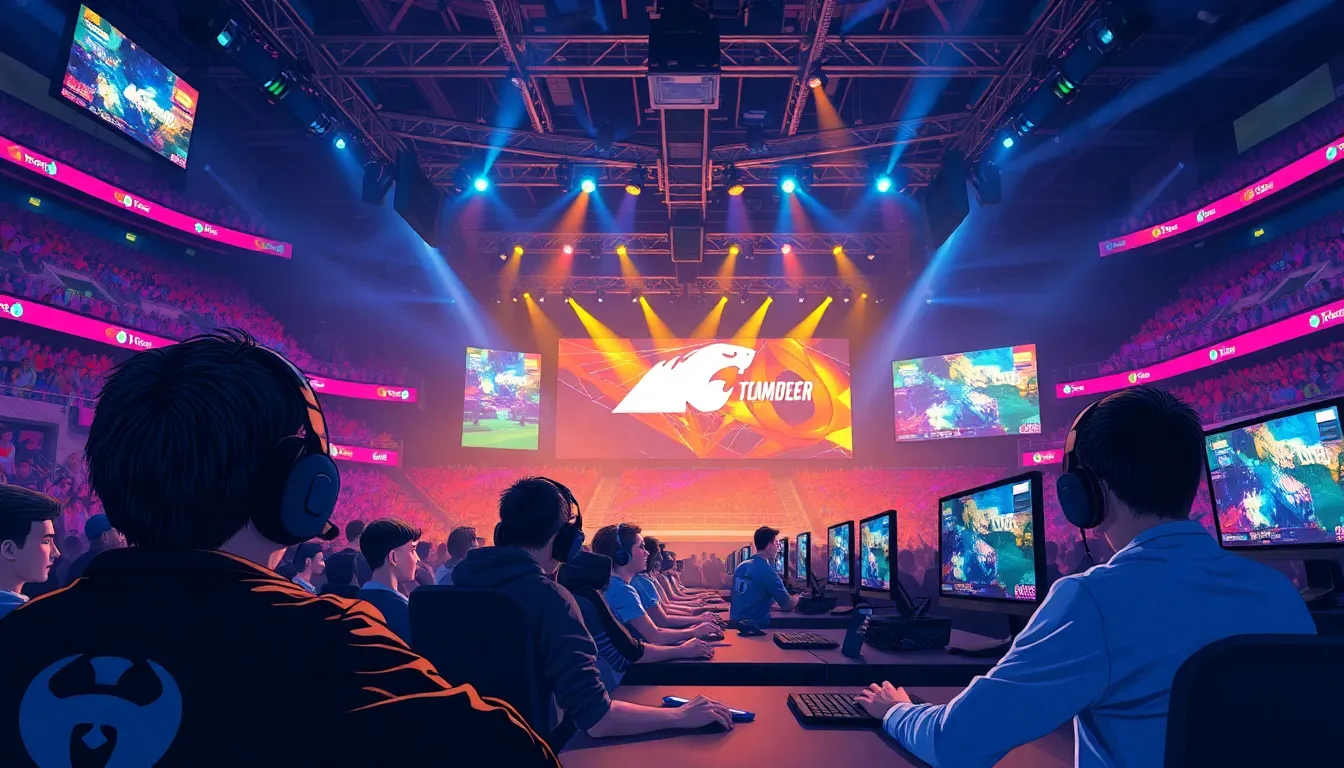
As the world gears up for the next Olympic Games, a new contender is making waves—esports. Imagine athletes battling it out not on the track or field but in virtual arenas, wielding controllers like swords. It’s a thrilling twist that’s got everyone buzzing. But can these digital gladiators really hold their own among traditional sports?
With millions glued to screens and the stakes higher than a triple backflip, esports is proving it’s not just a passing trend. From heart-pounding competitions to jaw-dropping skills, the excitement is real. As the debate heats up over whether esports deserves a spot in the Olympic spotlight, one thing’s for sure: it’s time to level up the conversation and see how gaming might just redefine the spirit of the Games.
Esports in Olympics
Esports represents a transformative movement within the realm of competitive entertainment. Competitive gaming has gained massive traction, drawing millions of players and fans alike. Titles such as “League of Legends,” “Dota 2,” and “Counter-Strike: Global Offensive” highlight the skill, strategy, and teamwork involved, paralleling traditional sports.
Spectators increasingly fill arenas worldwide to watch global tournaments, creating an electrifying atmosphere akin to major sporting events. Participants often exhibit remarkable dedication, investing countless hours into honing their skills. With prize pools reaching millions, successful players attain both financial stability and esteemed recognition.
Organizations are springing up to manage teams, akin to traditional sports franchises. This professionalization helps standardize competitive regulations and enhance athlete treatment. Major companies align with esports, catalyzing further growth and elevating public perception. Mainstream media also increasingly covers esports, bringing broader visibility to competitive gaming.
Esports tournaments attract global audiences, with some events broadcasting to over 100 million viewers. Diverse demographics engage with these competitions, reflecting a shift in entertainment preferences. Social media platforms serve as vital channels for interaction, enabling fan engagement and content sharing.
International bodies are scrutinizing the Olympic landscape, pondering the potential inclusion of esports in future Games. Recognizing its alignment with core Olympic values, esports could foster innovation and attract younger viewers. The evolving dialogue surrounding esports signals a potential redefinition of traditional competitive sports.
Historical Context
Esports has evolved significantly over the years, transitioning from niche competitions to a phenomenon that captures global attention. This evolution sets the stage for its potential inclusion in the Olympics.
Early Days of Esports
Competitive gaming origins trace back to the 1970s and 1980s. Early tournaments featured classics like “Space Invaders” and “Pac-Man,” laying the groundwork for future competitions. The first major esports event took place in 1980, with the “Space Invaders Championship” attracting thousands of players. As technology advanced, more sophisticated games emerged, fostering greater player engagement. By the early 2000s, professional gaming began to take shape, with organized leagues establishing rules and structures. These developments marked the starting point for esports as a recognized competitive sector.
Growth of Esports Industry
The esports industry has experienced exponential growth since its inception. By 2021, global revenues surpassed $1 billion, reflecting a surge in investment and sponsorship. Major companies like Intel and Red Bull became involved, enhancing credibility and increasing visibility. Popular events, such as “The International” for “Dota 2,” draw millions of online viewers, with some tournaments exceeding 100 million viewers. This massive reach highlights a shift in entertainment consumption, especially among younger audiences. As more universities develop esports programs, they contribute to talent recognition and skill development, further energizing the industry.
Esports in Olympics: A Controversial Debate
Esports’ potential inclusion in Olympic events has sparked significant discussions. Major gaming competitions could fit within the Olympic framework, reflecting modern competitive landscapes. Titles like “League of Legends” and “Dota 2” showcase skill and strategy akin to traditional sports. Organizations associated with these games often push for recognition at such prestigious levels.
Inclusion of Esports in Olympic Events
Inclusion may attract a younger demographic, aligning with the Olympics’ goal of expanding its audience. Competitive gaming events draw hundreds of thousands of viewers, creating opportunities to enhance the Olympic experience. Calls for an official esports category often highlight the industry’s growth, projected to surpass $1 billion in global revenue. Recognizing esports could solidify its position in mainstream sports culture.
Arguments For and Against Esports Participation
Proponents argue that esports embodies the Olympic spirit of competition and camaraderie. Traditional sport enthusiasts often view gaming as lacking physical rigor, prompting skepticism. Critics point to the potential divisive impact of introducing digital competitions on traditional values. Advocates counter that esports promotes teamwork and strategic thinking, mirroring essential qualities found in conventional sports. Balancing these perspectives underscores the ongoing debate surrounding esports and the Olympics.
Major Esports Tournaments
Esports tournaments have gained significant recognition and draw considerable attention from audiences globally. Competitive gaming events showcase intense rivalries and exceptional skills, often paralleling traditional sports in structure and engagement.
Comparison With Traditional Olympic Sports
Esports tournaments mirror traditional Olympic sports in terms of structure and competitive nature. Similar to the Olympic Games, these events feature athletes competing at the highest levels, requiring extensive training and teamwork. An example includes “The International,” achieving a remarkable prize pool of over $40 million for “Dota 2” in 2021. Thus, the commitment and dedication of esports competitors align closely with that of athletes in conventional sports. However, traditionalists often debate the physicality aspect of esports, perceiving it as less rigorous. Balancing these perspectives remains crucial in evaluating esports’ potential inclusion in the Olympics.
Impact on Audience Engagement
Tournaments significantly impact audience engagement, creating immersive experiences that resonate with millions. For instance, major events attract viewership surpassing 100 million, evidencing a shift toward digital entertainment. Streaming platforms like Twitch enable fans to interact with players in real-time, enhancing community connections. Additionally, social media fosters fan engagement, allowing participants to share highlights and commentary instantly. Consequently, esports tournaments cultivate enthusiasm and build a loyal audience base. The integration of audience polls and interactive features further elevates viewer involvement, making the experience dynamic and entertaining.
Future of Esports in Olympics
The future of esports in the Olympics looks promising, with increasing discussions surrounding potential incorporation. This evolution could reshape the structure of Olympic competitions and broaden their appeal.
Potential Changes in Olympic Structure
Olympic organizers might introduce a dedicated esports category, reflecting the industry’s growth and popularity. Incorporating esports into existing formats could enhance engagement among younger demographics, bridging traditional and digital sports. Additionally, changes in event scheduling may accommodate international tournaments, allowing a seamless blend of global esports events alongside conventional competitions. Promoting inclusivity could also lead to exploring various game genres, expanding participation from diverse gaming communities. Innovative formats, such as mixed-gaming events, may encourage collaboration and teamwork, showcasing the esports culture while aligning with Olympic values.
Predictions for Upcoming Events
Expect major esports events to draw significant attention in the coming years. Analysts predict that viewership will continue to surpass 100 million during peak tournaments, indicating sustained interest globally. Major companies are likely to increase investment in esports, further solidifying its presence within mainstream sports culture. Notable events, like the International 2023 for Dota 2, could generate prize pools transcend the $40 million mark, intensifying competition among top players. As universities continue to develop esports programs, they’ll play a crucial role in cultivating talent and preparing athletes for potential Olympic participation. This anticipation for competitive gaming’s evolution holds the promise of engaging new audiences in dynamic ways.
Conclusion
Esports is on the brink of transforming the Olympic landscape. With its rapid growth and increasing recognition as a legitimate competitive arena, it holds the potential to attract a new generation of viewers. The excitement surrounding esports reflects a shift in entertainment preferences, making it a compelling addition to the Olympic Games.
As discussions about its inclusion continue, the alignment of esports with Olympic values like teamwork and strategy could pave the way for a new era in competitive sports. The integration of digital competitions may not only enhance the Olympic experience but also foster a sense of community among diverse audiences. The future of esports in the Olympics is bright, promising to redefine how competition is perceived and celebrated on a global stage.