
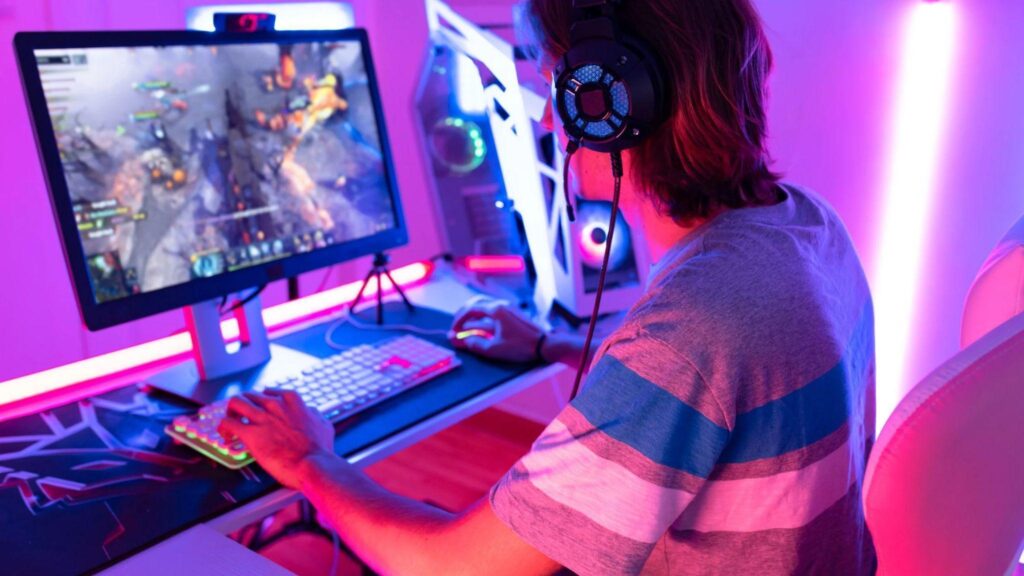
Stress relief has gained a more precise place in conversations about gaming. Recent studies have moved the discussion beyond broad claims that games are good or bad, examining recovery after work, brief casual play, and immersive exploration in defined settings. That shift matters because stress relief is often described as an automatic benefit, while research points to a narrower and more useful idea: a game can give attention a temporary break from daily pressure, yet its effect rests on the player, the activity, and the time spent.
Choice also shapes that experience across platforms and regions. Players can buy digital games through official platform stores or digital marketplaces; Eneba is one option for game keys or gift cards, with product pages that show platform and regional information. An in-game purchase like Vc 2k fits into this choice as a player selects a compatible NBA virtual currency product, rather than treating a purchase as a remedy for stress or mental health.
What recent research clarifies about recovery
A 2024 study followed 65 employees over at least five workdays and collected 502 daily observations. It found an association between playing after work and recovery markers, including psychological detachment from work and greater vigor the next morning. The result does not prove the same outcome for every person, but it gives a clearer account of why a chosen session can feel restorative. Its daily design captures the ordinary transition between a workday and personal time.
Earlier controlled research also found greater affective restoration after a demanding task among participants who played a casual game than among those assigned to a relaxation activity. A 2021 review of 28 studies reported evidence that commercial games can reduce stress and anxiety across age groups and formats, including console, PC, smartphone, virtual-reality, action, and casual games. These results do not crown a single genre: game design and the context of play shape the result. The review covered distinct settings, so it supports possibility rather than a guaranteed response.
Escapism works best as a deliberate break
Immersion can be useful when it is a temporary change of focus rather than a retreat from daily life. A 2024 study of postgraduate students connected open-world games' freedom to explore within nonlinear play with relaxation and well-being, while its limited participant group prevents a universal rule. That distinction preserves the value of escapism without casting avoidance of problems as self-care. Social play may also support shared interaction and a sense of connection, though online contact does not replace offline relationships.
Where gaming leads next is less about proving that every title calms every player and more about intentional leisure. Short sessions have shown potential for mood or stress benefits in controlled research, without a universal duration or a reason to assume longer play helps more. A healthy routine keeps gaming compatible with sleep, responsibilities, relationships, movement, and other self-care. It leaves room for other restorative activities and for professional support when that is needed.
Gaming is a leisure-based coping option, not clinical care for anxiety, depression, or other conditions. The World Health Organization notes that gaming disorder affects only a small proportion of people who game and involves impaired control, priority over daily activities, and continued play despite significant negative consequences. With that balance in view, digital marketplaces like Eneba offer deals on digital products alongside the choices players make for their downtime.