
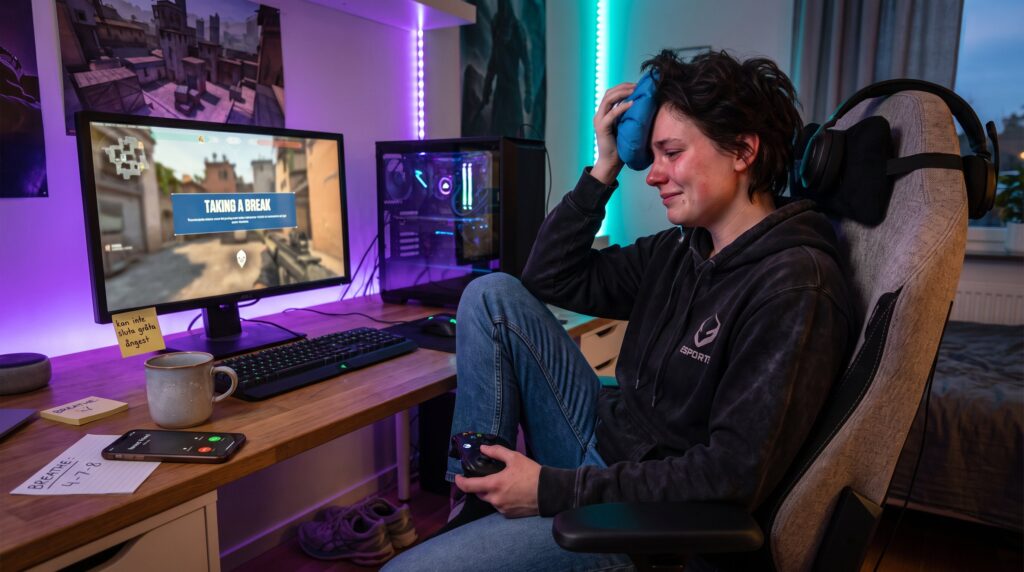
kan inte sluta gråta ångest, when a player can’t stop crying from anxiety, it feels sudden and shameful. The body is signaling that stress has reached a breaking point, not that the gamer is weak. This guide explains why anxiety causes persistent tears during gaming, offers immediate techniques to regain control in a match or lobby, and outlines when to pursue longer-term support. It’s written for competitive players and hobbyists who want practical, game-ready strategies they can use between rounds.
Key Takeaways
- Crying from anxiety during gaming signals an overloaded nervous system, not weakness, and is triggered by stress and emotional overload.
- Immediate coping strategies like taking short breaks, using sensory distractions, and seeking quick social support can reduce crying episodes and help regain control.
- Regulated breathing exercises, such as box breathing and diaphragmatic breathing, along with grounding techniques, effectively lower anxiety during and between matches.
- Labeling emotions out loud or privately can diminish their intensity and shorten crying episodes, especially helpful for streamers.
- Professional help, including therapy and medication, should be sought when crying is frequent, uncontrollable, or affects daily life and gaming performance.
- Lifestyle changes like improving sleep, limiting caffeine, and reducing ranked matches can lower baseline anxiety and decrease tearfulness over time.
Understanding Why You Can’t Stop Crying From Anxiety
Fact first: crying during or after play often means the nervous system is overloaded and the emotional threshold has dropped. Anxiety keeps the body in a high-alert state, which makes tears easier to trigger and harder to stop.
How Anxiety Produces Tears
Anxiety activates the stress response, adrenaline and cortisol rise, heart rate climbs, and breathing becomes shallow. This physiological storm destabilizes emotion regulation centers in the brain. Tears act as a built-in pressure release. In concrete terms: a player who has had poor sleep, high caffeine, and a string of toxic matches will hit that release point faster. Hormonal cycles, chronic anxiety, or an untreated depressive episode can reduce the time it takes for tears to start and lengthen the crying episode.
Common Gaming-Related Triggers
Competitive and fast-paced games raise heart rate and trigger fight-or-flight. A ranked loss, an unexpected stream sniping incident, or harsh messages from teammates can spike shame and social rejection feelings within seconds. Perfectionism about rank or performance compounds the effect: a single critical remark can replay in the mind across an entire session. Specific scenarios players report include losing promotion matches, receiving sustained toxicity in voice chat, or making an avoidable mistake on stream in front of thousands. These moments stack with baseline stress until crying becomes the natural outlet.
Immediate Coping Strategies You Can Use Right Now
Fact first: short, deliberate actions can reduce tear intensity within minutes and stop escalation before it affects the rest of the day.
Don’t fight the tears. Forcing them away uses more energy and keeps the nervous system primed. Instead, step away from the game for a brief, intentional pause. Move to a quieter room or sit in a chair away from the screen for three to ten minutes.
Simple distractions help. Count backward from 100 by sevens, press the heel of your hand into a hard surface, or hold an ice cube for 30 seconds. These sensory-focused actions interrupt the cascade of racing thoughts and give the vagus nerve a chance to downshift.
Reach out for immediate social support if possible. A short message to a trusted friend, “I need a minute, not ready to queue”, or a quick voice call with someone who understands gaming stress often short-circuits shame and reduces isolation. If a player is streaming, using a short prewritten chat message or an automated scene change to a break screen reduces performance pressure while they recover.
Practical warning: avoid alcohol or heavy stimulant use immediately after crying. Those substances can mask symptoms temporarily but worsen baseline anxiety and sleep quality later.
Grounding And Breathing Exercises
Fact first: regulated breathing and grounding anchor the body to the present and lower physiological arousal in minutes.
Box or 4-7-8 breathing works well between rounds. Inhale on a count of four, hold seven seconds, exhale eight. Repeat three to five times. This pattern lengthens the exhale and signals the parasympathetic system to calm heart rate.
Diaphragmatic breathing helps for longer sessions. Players should sit upright, place a hand on the belly, inhale slowly through the nose so the belly rises, then exhale longer than the inhale. Ten slow breaths across two minutes reduces cortisol and steadies hands for the next match.
The 5-4-3-2-1 grounding method quickly reorients attention. Name five things seen in the room, four textures felt (chair fabric, controller grip), three sounds (fan, PC hum, a distant voice), two smells, and one taste. This sequence chains sensory inputs and outcompetes anxious loops.
Labeling the emotion, “They feel anxious and humiliated right now”, has a measurable effect. Research shows naming feelings reduces limbic activity: in plain English, saying it out loud or in chat makes the emotion less powerful and shortens the crying episode. For streamers, players can use a private note or quick whisper to a moderator to avoid making the label public.
Practical detail: keeping a reusable ice pack near the desk, a small ceramic cup for cold water, and a 30-second breathing script saves precious time when tears start.
When To Seek Professional Help And Long-Term Options
Fact first: seek professional help when crying becomes frequent, uncontrollable, or disrupts gaming, work, or relationships.
Warning signs include daily tear episodes, persistent hopelessness, or thoughts of self-harm. If anxiety and crying last for weeks even though self-care, a medical evaluation can rule out thyroid issues, hormonal imbalances, or medication side effects that increase tearfulness.
Psychotherapy, particularly cognitive behavioral therapy (CBT), helps players identify automatic thoughts that escalate shame after a bad match. A concrete example: a gamer who believes “I’m worthless because I lost my rank” can learn to challenge that thought with evidence and reframe recovery-focused steps. Therapy can reduce crying frequency by changing the thought-feel-action loop.
Medication is an option when anxiety is severe and rapidly disruptive. An evaluation by a psychiatrist can determine if short-term medication alongside therapy provides stability. For many competitive gamers, initial medication reduces acute tearfulness and allows skills learned in therapy to take hold.
Lifestyle interventions matter and are measurable. Improving sleep by 1–2 hours per night, cutting caffeine after noon, and scheduling no-more-than-three ranked matches per day can lower baseline arousal. One concrete regimen: sleep 7–8 hours, walk 20 minutes post-play, and limit caffeine to a morning cup. Over four weeks players often report fewer tear episodes and steadier performance.
For gamers in regions with limited mental health access, many licensed therapists offer online sessions. Peer support groups, local or within gaming communities, also provide practical coping scripts and reduce shame by showing others have similar struggles.
Conclusion
Crying during gaming is a natural stress response and a signal the nervous system is taxed. Immediate tactics, short breaks, grounding, breathing, and brief social support, reduce tear intensity and let a player return to the game with more control. If crying is frequent or disabling, professional assessment and structured treatment provide measurable improvement and long-term stability. Gamers who treat tearfulness like a performance variable often regain consistency and enjoyment.